
The patrol to SWAT handoff that quietly loses you time
Most incidents start with patrol and grow from there. The moment a specialized team activates, an expensive thing happens: the picture gets rebuilt from scratch. It doesn’t have to.
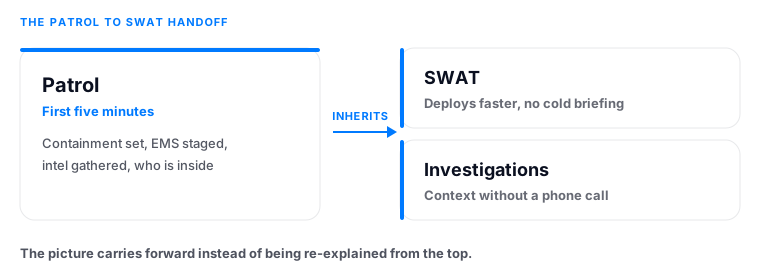
Patrol is almost always first on scene. On a larger incident they get containment up, set a perimeter, work the intel, and start tracking resources, often while a supervisor juggles dozens of details and makes consequential calls in real time. The first five minutes is getting control of the scene. Then it escalates, and a specialized team gets called.
The hidden cost of activation
Patrol holds a scene for forty minutes before the tactical team rolls up. In that time they set containment, move EMS to staging, work the neighbors for intel, and get a read on who is inside and where. Then SWAT arrives, and the first thing asked for is a briefing from the top. So the on-scene supervisor walks through all of it again, out loud, from the beginning, while the perimeter sits and the clock keeps running. None of it was wrong. It was just told twice, because the work patrol did never carried forward in any form but a person’s memory.
When SWAT activates, there’s a gap between call-out and deployment. Team members travel to a briefing location. Supervisors organize resources. And much of what patrol already knew gets recreated, because the tactical team is entering from outside the patrol operation, working off whatever made it into a verbal briefing.
- Containment positions get re-described instead of inherited.
- Intel patrol already developed gets re-gathered.
- The clock runs while the picture is rebuilt.
A live synced workspace closes the gap
BabbarOps Incident Command is the shared operational workspace for the whole incident, and it is live synced. The moment anyone updates it, everyone sees the change. So by the time SWAT sits down to brief, the operational picture is already there:
- Resources and assignments patrol established
- Existing containment positions
- Intel and supporting information developed on scene
- Operational objectives and incident history
That turns the handoff from a re-gathering exercise into a head start. SWAT spends less time collecting information and more time on the tactical plan.
Built for both reactive and planned operations
The same workspace supports the operations you know about in advance, warrant service and planned investigative operations, where the plan, assignments, threat assessment, and medical plan are built ahead of time and run live the day of. Reactive or planned, every role works from one current view, the same principle that makes multi-agency incident command work across jurisdictions.
Everyone inherits the picture
It’s not just patrol to SWAT. Detectives work the same live picture in parallel, building documentation off current information instead of waiting for a separate briefing. Leadership sees the same unified view for oversight. The incident picture follows the call from first response through resolution, and nobody rebuilds it along the way.
The handoff was never the problem. The problem is that the work patrol does in the first forty minutes only survives in one person’s head, and a verbal briefing is a slow, lossy way to move it. Carry the picture forward instead of re-explaining it, and the time you save is time the team spends on the plan, not on catching up to where patrol already was.
The picture patrol already built: resources and assignments, existing containment positions, intel and supporting information developed on scene, and the operational objectives and incident history. By the time SWAT begins briefing, that information is already in the workspace.
The moment anyone updates the workspace, everyone sees the change. The tactical team doesn't re-describe containment or re-gather intel patrol already developed, so the handoff becomes a head start: SWAT spends less time collecting information and more time on the tactical plan.
Yes. The same workspace supports operations you know about in advance (warrant service and planned investigative operations) where the plan, assignments, threat assessment, and medical plan are built ahead of time and run live the day of.
Detectives work the same live picture in parallel, building documentation off current information rather than waiting for a separate briefing, and leadership sees the same view for oversight. The picture follows the incident from first response through resolution, and nobody rebuilds it along the way.
Sukh Bhela is a California police sergeant who has served as a UAS operator, UAS supervisor, and incident commander during critical incidents. His experience leading patrol operations and integrating drone technology into public safety responses led him to found BabbarOps, where he builds tools for live situational awareness and incident command. He writes about policing, drone operations, leadership, and the technology shaping the future of emergency response.
The views expressed here are the author's own, written in his personal capacity. They do not represent, and are not made on behalf of, any law enforcement agency or employer.
BabbarOps is an independent commercial product and is not affiliated with or endorsed by any law enforcement agency. This article describes platform capabilities at a general level.