
Drone as first responder: the feed only matters if command sees it live
A DFR program can put eyes over a scene in seconds. But a drone overhead is only an advantage if the right people see what it sees, in real time, on the same picture.
A hot call drops and the drone launches off the rooftop before the first unit clears the lot. About ninety seconds later it is overhead, and the pilot can see the suspect crouched in the backyard, behind the shed, watching the side gate the officers are about to come through. The pilot has it cold. The problem is the pilot is the only one who can see it, so the warning goes out the only way it can: over the radio, one sentence at a time, while the officers picture a backyard they have never seen. The aircraft did its job. The hard part is everything after.
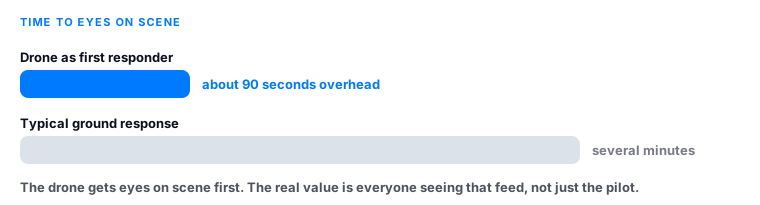
That is the part DFR programs underestimate. Getting the aircraft there fast is only half of it. The flight is the headline; the operational value lives somewhere quieter, in whether the people making the call can actually see what the pilot sees while it still matters.
The gap in most DFR programs
Plenty of agencies can get a drone airborne. Fewer have closed the part that turns that flight into a decision advantage:
- The pilot sees the feed. The responding units don’t.
- The feed reaches one screen in one room, not the patrol units rolling up, not the commander forming a plan.
- By the time the video is shared, the moment it would have informed has passed.
You have a drone overhead, but that doesn’t give everyone responding a shared picture. A DFR program without a live command layer is a flight program, not a situational awareness program.
BabbarOps is the live layer DFR is missing
BabbarOps takes the DFR feed and puts it where the decisions get made, live, on a shared wall every authorized role can open at once.
- One tap to go live. The DFR aircraft starts streaming with a single action. No links to generate, no setup mid launch.
- One login to watch. Responding units, command, and leadership log into the agency account and see the feed as it happens.
- Every vantage on one wall. The DFR feed sits beside other drones, helicopters, fixed cameras, and witness video. One unified view, not scattered screens.
From first-on-scene to resolution
Because BabbarOps pairs the live feed with a shared incident workspace, the DFR feed doesn’t stop at the video. As the call develops, command tracks assignments, containment, and intel against the same incident picture. Patrol, investigations, and the tactical teams all work from it without rebuilding context.
The flight is the easy part now. The hard part was always the same: getting what the aircraft sees into the heads of the people on the ground before the moment it would have changed has already passed.
DFR puts a drone over a 911 call before the first unit arrives, giving responders a read on the situation while they're still en route. The flight is only part of the value: the operational advantage depends on whether the people making decisions can see the feed while it matters.
With BabbarOps, the DFR aircraft starts streaming with a single action: no links to generate, no setup mid launch. Responding units, command, and leadership log into the agency account and see the feed as it happens, on one wall beside other drones, helicopters, fixed cameras, and witness video.
No. BabbarOps is hardware agnostic and works with any drone over standard streaming protocols like RTMP, RTSP, and SRT. There is no proprietary encoder or approved-device catalog to buy into.
No. BabbarOps live video is live-only by design and is not retained, so it adds no retention burden to a DFR program. It is not a system of record. Your agency's existing evidence management system keeps that role.

Sukh Bhela is a California police sergeant who has served as a UAS operator, UAS supervisor, and incident commander during critical incidents. His experience leading patrol operations and integrating drone technology into public safety responses led him to found BabbarOps, where he builds tools for live situational awareness and incident command. He writes about policing, drone operations, leadership, and the technology shaping the future of emergency response.
The views expressed here are the author's own, written in his personal capacity. They do not represent, and are not made on behalf of, any law enforcement agency or employer.
BabbarOps is an independent commercial product and is not affiliated with or endorsed by any law enforcement agency. Capabilities depend on agency hardware, flight authority, and network conditions.