
One picture across jurisdictions, not one per agency
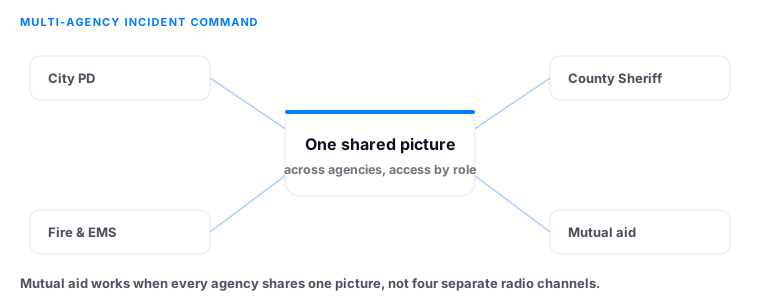
The hardest part of a multi agency response isn’t the manpower, it’s that every agency arrives with its own view. A joint operation needs one shared picture, not five partial ones.
Mutual-aid responses, task forces, and large planned events all hit the same coordination problem: multiple agencies, multiple systems, and no common view. Each agency sees its own feeds, tracks its own assignments, and holds its own intel. The joint command burns its energy reconciling all of it instead of running the operation.
Why joint operations fragment
- Each agency’s video and tools stay inside that agency.
- Assignments and intel sit in separate places that don’t talk.
- The unified command is unified in name. Not in picture.
A shared picture across agencies
BabbarOps gives a multi agency response one live operational picture the right people across the operation work from, with access scoped to role and need to know.
- Every feed, one wall. Drones, aircraft, and cameras from across the response in one view.
- Live synced workspace. Assignments, perimeter, resources, and intel update for everyone at once.
- Controlled access. Each participant sees what their role and the operation require.
From mutual aid to handoff
Because the picture is shared and live, a unit rolling in from a neighboring jurisdiction doesn’t need a separate briefing to get oriented. It inherits the current picture, the same principle behind the patrol to SWAT handoff. And as the operation moves between phases and teams, the context carries with it instead of being rebuilt at every boundary.
Yes. BabbarOps gives a multi-agency response one live operational picture: drones, aircraft, and cameras from across the response land on one wall, and assignments, perimeter, resources, and intel update for everyone at once.
Access is scoped to role and need to know. Each participant sees what their role and the operation require, so agencies share a common picture without opening everything to everyone.
No. Because the picture is shared and live, a unit arriving from a neighboring jurisdiction inherits the current picture instead of getting oriented through a separate briefing. As the operation moves between phases and teams, context carries with it rather than being rebuilt at every boundary.

Sukh Bhela is a California police sergeant who has served as a UAS operator, UAS supervisor, and incident commander during critical incidents. His experience leading patrol operations and integrating drone technology into public safety responses led him to found BabbarOps, where he builds tools for live situational awareness and incident command. He writes about policing, drone operations, leadership, and the technology shaping the future of emergency response.
The views expressed here are the author's own, written in his personal capacity. They do not represent, and are not made on behalf of, any law enforcement agency or employer.
BabbarOps is an independent commercial product and is not affiliated with or endorsed by any law enforcement agency.